Discover why modern camps are replacing wood bunks with hygienic, heavy-duty steel alternatives.
Heavy Duty Bunk Bed Solutions
Here’s Why Camp Facilities Are Replacing Wood Bunks With Hygienic Industrial Grade Steel Alternatives
Key Takeaways
1
2
Learn how industrial-grade beds and mattresses reduce pests, maintenance, and turnover time.
3
Explore key safety standards like CPSC 16 CFR 1513 and how top bunk systems exceed them.
4
See how sealed, waterproof mattresses complete a durable, bed bug resistant sleep setup.
The Benefits of Heavy-Duty Bunk Beds in Summer Camps
Every summer camp director faces the same fundamental challenge: how to provide comfortable, safe, and hygienic sleeping arrangements for hundreds of campers in high-turnover cabins, all while managing tight budgets and limited maintenance staff.
But today's challenges go beyond durability. One bed bug complaint can ripple through online reviews and erode hard-earned trust with parents. And as more camps expand into year-round retreats, serving adult guests with higher expectations, the demand for professional-grade bunk beds is only growing.
The solution must be rugged enough to withstand seasonal excitement, easy enough to clean between sessions, and secure enough to meet the most stringent safety standards. In short, the beds are the foundation of a great night’s sleep, and the foundation of a successful camp season.
For generations, the image of a classic summer camp is inseparable from the sight of rustic wooden bunks. They evoke a comforting sense of tradition and nostalgia. However, the demands of modern youth facilities — where hygiene, appearance, and long-term reliability are paramount — have revealed the limitations of wood.
As facility managers seek solutions that simplify turnover, reduce pest risk, and protect both guest comfort and camp reputation, the industry is making a decisive shift. Steel, once seen as purely industrial, has now become the preferred material. This is where the engineering of commercial-grade steel bunks comes into play. ESS Universal, through its heavy-duty designs, has engineered a solution that moves beyond mere tradition to embrace rugged strength, superior cleanability, and unmatched safety.
Heavy Duty Bunk Beds provides the perfect balance of strength, hygiene, and long-term comfort essential for seasonal and year-round youth programming. By choosing industrial-grade steel, camp leaders can honor the spirit of the outdoors while providing a structurally superior, pest-resistant, and maintenance-friendly environment for their campers. These summer camp bunk beds are built for demanding cabins that need lasting durability and easier upkeep.
Why Steel Outperforms Wood in Camp Environments
When evaluating the total cost of ownership (TCO) for dormitory furniture, the initial purchase price is only a fraction of the story. For a high-impact environment like a summer camp cabin bunk, the long-term factors of hygiene, longevity, and maintenance quickly tip the scales in favor of engineered steel over traditional wood.

Hygiene: The Non-Negotiable Standard for Camp Dorms
In any environment hosting hundreds of guests, often in close quarters, controlling pests and managing moisture is critical. Wood, by its nature, is porous and absorbent. It acts like a sponge, soaking up spilled drinks, moisture from damp swimsuits and towels, and condensation, creating ideal breeding grounds for mildew, mold, and unwelcome pests like bed bugs. Furthermore, wooden bunks are typically assembled using screws, bolts, and dovetail joints that inevitably create crevices, gaps, and hidden spaces.
In contrast, steel bunks designed for commercial use are inherently sanitary. The frame is finished with a non-porous, highly durable powder coat that completely seals the metal, resisting moisture absorption and prohibiting the growth of mold or mildew. Crucially, the joints are often seam-welded, meaning there are virtually no open seams, gaps, or internal voids where insects can hide, lay eggs, or survive treatment. A steel frame can be sanitized quickly and completely, offering facility directors peace of mind that their sleeping quarters meet the highest standards of cleanliness and public health.
Longevity: Decades of Reliable, Squeak-Free Use
While solid 4" x 4" wood frames can offer excellent structural longevity under ideal conditions, wood introduces a different set of challenges in high-turnover camp environments. Graffiti, carvings, and cosmetic wear are common and difficult to reverse. Over time, exposure to moisture, daily use, and routine cleaning can cause swelling, splintering, or finish degradation — even in durable hardwoods. These surface-level issues, while not necessarily structural, often
lead to premature replacement for aesthetic or hygiene reasons, adding unexpected costs over time:
- Loosening Joints: Repeated assembly, disassembly, and daily use cause screws to strip and connections to loosen, leading to unstable, rickety, and noisy bunks.
- Warping and Splintering: Exposure to humidity, temperature fluctuations, and repeated cleaning agents cause the wood to swell, warp, and eventually splinter, creating sharp edges that are a genuine safety hazard.
- Stress Failures: Wood has a limited capacity to withstand continuous dynamic loading (kids jumping, climbing, etc.) before the integrity of the material is compromised.
Engineered steel bunks are built to an industrial standard, not a residential one. They are designed to withstand decades of continuous, heavy-duty use. The robust steel structure maintains its rigidity over time, remaining silent and squeak-free—a significant factor in ensuring good sleep quality for campers and staff. The high-capacity rating means the bunks remain structurally sound season after season, drastically reducing the frequency of replacement and the annual budget allocation for furniture repair.
Maintenance: Simplified Setup, Storage, and Turnover
Time is money, especially during the frenetic 48-hour window between camp sessions. Wooden bunks often require a small arsenal of tools and multiple loose parts (washers, specialized screws, wooden dowels) to assemble or disassemble. The process is slow and often results in lost components, forcing staff to improvise and compromise safety.
Steel bunk systems designed for camp use prioritize ease and speed. Many commercial-grade designs utilize simplified, robust connection points that require minimal tools, often allowing a bunk to be fully assembled in under 20 minutes. This allows staff to quickly convert a double bunk into two single beds for flexible room setups or disassemble them rapidly for off-season storage. This simplicity minimizes labor costs and ensures that every summer camp cabin bunk is properly and safely assembled every time. Many facilities are now upgrading to summer camp bunk beds designed specifically for high-turnover cabin environments.
Optional Color Customization: Maintaining Camp Personality
The common argument against steel is that it lacks the warm, traditional personality of wood. However, modern manufacturing techniques allow facilities to choose customized aesthetics without sacrificing safety or durability. For larger orders (typically 50+ sets), commercial steel bunks can often be finished in custom colors using the RAL spectrum. This means a camp can choose a vibrant green, a deep forest blue, or their specific organizational colors, keeping the camp's unique personality alive while upgrading to a safer, more durable, and more hygienic sleeping solution. Modern summer camp furniture can now combine durability, hygiene, and visual customization without sacrificing long-term performance.
Camper Safety and Regulatory Compliance

Camper safety is the non-negotiable core value of any youth facility. For furniture designed to hold people several feet off the floor, meeting and exceeding established government and industry safety standards is not just good practice—it is a legal necessity. For this reason, camp directors must be intimately familiar with the key regulatory guidelines for bunk beds:
- CPSC 16 CFR 1513 (Consumer Product Safety Commission): This federal mandate focuses on preventing entrapment hazards and structural failures. It dictates specific requirements for the construction of bunk beds, particularly concerning guardrails and structural integrity.
- ASTM F1427 (American Society for Testing and Materials): This standard provides a voluntary, yet widely adopted, set of specifications for the safety design of bunk beds for commercial and institutional use.
A truly heavy-duty bunk bed must be engineered to not just meet but significantly exceed these minimum standards.
Exceeding Guardrail, Spacing, and Ladder Requirements
The CPSC and ASTM standards detail exact specifications for critical safety features:
- Guardrail Height and Continuity: Guardrails must be continuous on both sides of the upper bunk (except for the necessary opening for a ladder) and must extend a minimum height above the surface of the mattress to prevent a child from rolling out.
- End Structure Openings: Openings in the end structures (headboards and footboards) and between the guardrail and the bed frame must be strictly regulated to prevent head or limb entrapment.
- Ladder Safety: Ladders must be secured to the bed frame and designed for secure footing, often favoring integrated or reinforced designs over flimsy, temporary hooks.
Heavy Duty Bunk Beds address these requirements by using industrial-grade, thick-walled steel tubing, providing inherently stronger support structures for guardrails and end panels. Crucially, the precision of steel fabrication ensures that all spacing standards are consistently met, eliminating the dimensional compromises often seen in lower-quality or wooden furniture whose joints degrade over time. Well-engineered metal camp bunk beds also provide the structural strength needed to maintain consistent safety performance over many seasons of use.
Weight-Capacity Testing and Industrial-Grade Construction
One of the most meaningful differentiators between commercial camp bunk beds is weight capacity. While many competitors offer institutional-grade bunks rated at 350 to 400 pounds per platform, these designs can fall short in the high-impact reality of youth facilities.
ESS Universal’s steel bunks are independently stress-tested to support up to 500 pounds per sleeping platform. This higher load rating ensures they can safely accommodate not just campers and staff, but also the common scenarios of multiple children climbing or sitting on a single bunk — all without compromising structural integrity or triggering early wear.
The ability of a heavy-duty bunk bed manufacturer to exceed these minimums comes down to two engineering decisions:
- Industrial-Grade Steel: Using high-gauge steel that is resistant to bending and fatigue.
- Seam-Welded Joints: While ESS Universal's metal bunk beds are assembled using bolts and screws, the critical frame joints are seam-welded on all four sides to provide unmatched strength and stability. These permanent welds reduce structural flex and prevent pests from entering hollow tubing, addressing both safety and hygiene concerns. This hybrid construction approach delivers long-term durability without the rattling or loosening that can occur in all-fastener frames.
Built-In Bed Bug Defense
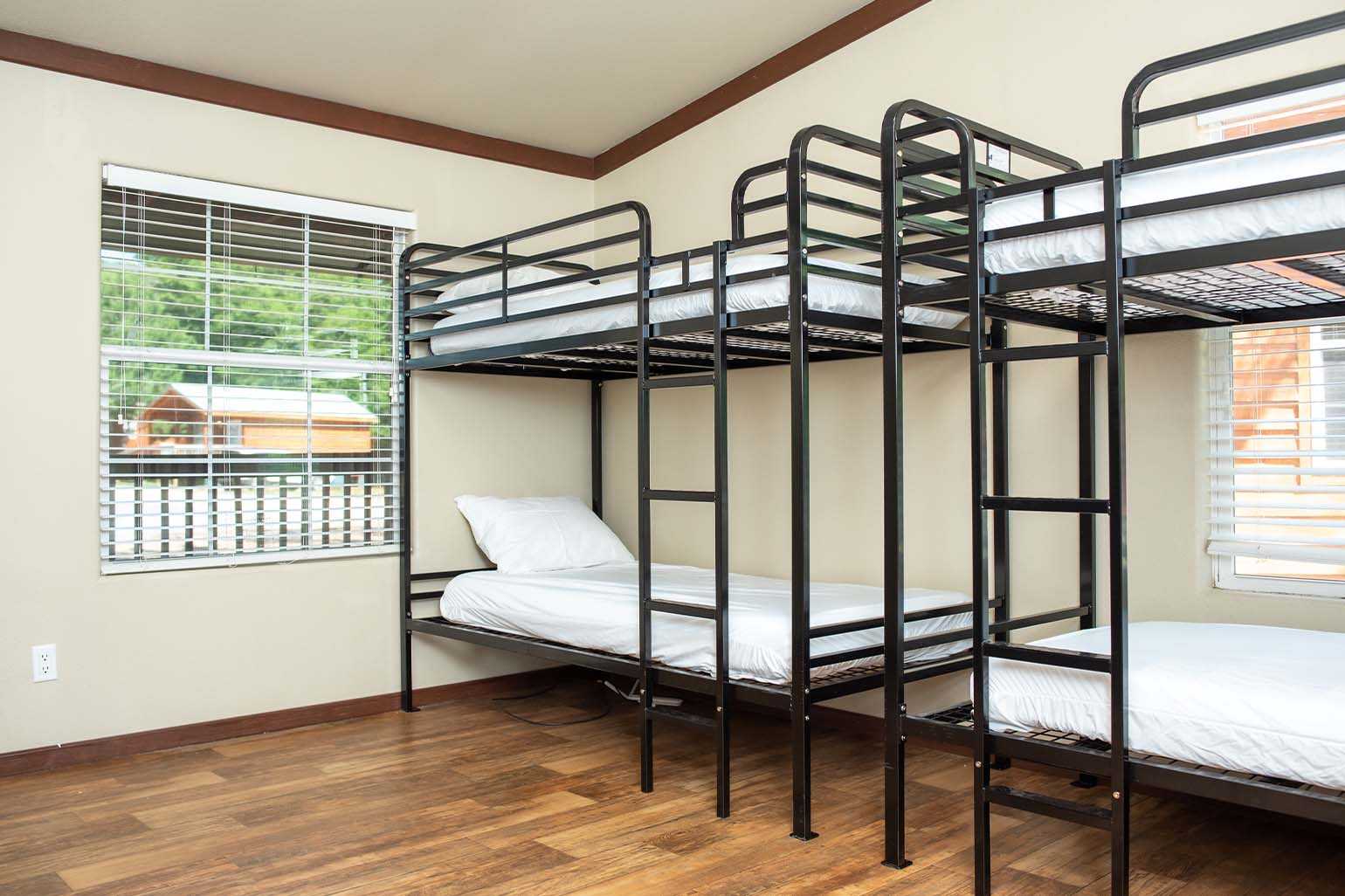
The modern camp director’s worst nightmare is a bed bug infestation. A single case can quickly become an epidemic, leading to costly room closures, expensive professional treatment, negative publicity, and the potential for staff burnout. The key to mitigating this risk lies in the furniture itself. Choosing bed bug resistant bunk beds is the most proactive, long-term defensive strategy against these pervasive pests.
The construction of heavy-duty steel beds offers distinct lines of defense that wooden beds simply cannot match:
Seam-Welded Frames Eliminate Hiding Spots
Bed bugs are masters of concealment. They are tiny and naturally seek refuge in small, dark, undisturbed crevices, particularly near the sleeping area. Wooden bunks, and even poorly designed metal bunks, offer a wealth of these hiding places:
- The gaps between wood joints and connections
- Screw holes, even when flush or minimal, can still present small entry points for pests if not properly sealed or integrated into a welded design
- Connection points between rails and headboards can provide potential hiding places if not tightly fitted; even flush connections, if unsealed, may offer narrow gaps for pests
The engineering behind ESS Universal’s bed bug resistant steel frames addresses this issue at its source. While most bunk bed manufacturers include weep holes in every steel tube as part of the manufacturing and powder-coating process to allow for drainage and air flow — inadvertently creating entry points for pests — ESS welds its structural tubes on all four sides. This process creates a fully sealed frame that eliminates the need for weep holes entirely, preventing pest intrusion and enhancing overall strength. Though bolts and screws are used for assembly, the critical welded joints remove common nesting areas and reinforce the bed’s hygienic design.
Non-Porous Powder-Coat Finish Resists Moisture and Nesting
A wood surface provides a slightly porous, textured place for bed bugs to grip and often absorbs the very moisture they need to thrive. The exterior finish of commercial steel bunks acts as a second barrier.
Heavy-duty frames are protected by a baked-on, electrostatically applied powder coat. This finish is non-porous, smooth, and highly resistant to scuffs and cleaning chemicals. Because the surface is sealed and non-absorbent, it actively resists moisture and prevents the microscopic etching that pests often use to create nesting sites. This finish ensures that the structure of the bed bug resistant bunk beds remains hostile to infestations, simplifying the job of housekeeping staff.
Protecting Reputation and Guest Experience in a Year-Round Camp Environment

In today’s connected world, a single mention of bed bugs in a camp review can damage years of hard-earned reputation. Parents are understandably cautious about where they send their children, and adult guests — who now make up a growing segment through retreats and off-season programming — have even higher expectations for cleanliness and quality.
Wooden bunks, while nostalgic, come with risks that go beyond pests. They’re prone to graffiti, often carved or marked by campers, which becomes nearly impossible to remove without sanding or refinishing. Over time, this wear diminishes the cabin’s professional appearance and can make facilities feel rundown, even if the structure is still sound.
Steel bunks offer a cleaner, more polished alternative that protects not only the sleeping environment but also the camp’s image. For facilities that operate year-round, minimizing visible wear and maximizing guest confidence is more important than ever.
Long-Term Value for Camp Directors
The purchase of new dormitory furniture is a major capital investment. Camp directors must present a business case that demonstrates not just initial safety compliance, but superior long-term financial return. Choosing durable steel camp beds and mattresses over traditional wood is a clear path to achieving a lower Total Cost of Ownership (TCO). Many camps now invest in complete summer camp bunk bed frames and mattresses designed to work together as a durable, hygienic sleep system.

Lower Total Cost of Ownership (TCO)
The TCO accounts for the full cycle of ownership: purchase, assembly, maintenance, repair, and eventual disposal. While wood bunks may have a lower sticker price, their TCO is significantly higher due to:
- Annual Repair Costs: Constantly tightening bolts, replacing stripped hardware, and sanding down splinters.
- Pest Treatment: The massive expense (often thousands of dollars per incident) of professional bed bug extermination, plus the loss of revenue from unusable cabin space.
- Premature Replacement: Having to discard entire bunks due to structural failure or irreparable warping after just 5–7 years.
Heavy-duty steel bunks flip this dynamic. Their higher initial cost is offset by near-zero maintenance needs. The durability and industrial construction mean they are designed to last 15–20 years or more, effectively doubling or tripling the useful life of the furniture compared to wood. This reduction in annual operating expenditures and capital replacement cycles makes them the fiscally responsible choice.
Simplified Cleaning and Turnover Between Sessions
One of the largest, yet often overlooked, operational costs in a high-turnover environment is labor. Housekeeping staff must efficiently sanitize rooms between sessions. Steel bunk systems radically simplify this process.
- Fast Surface Wiping: The non-porous frame and waterproof, sealed mattress encasements allow for a rapid, complete, full-surface wipe-down using thorough cleaning solutions. There is no need for time-consuming vacuuming of crevices or specialized steam cleaning required for porous wood.
- Mesh Decking: Many industrial designs feature a mesh or metal slat platform instead of solid wood decking. This allows debris (sand, dirt, small items) to pass through to the floor, where it can be easily swept or vacuumed, preventing trapped dirt and moisture buildup under the mattress. This streamlined turnover process ensures cabins are ready faster, maximizing the camp's operational efficiency.
Choosing the Right Mattress for Camp Durability and Hygiene
Even the strongest bunk frame is only as effective as the mattress it supports. In a camp environment where turnover is fast, use is constant, and cleanliness is paramount, the mattress plays a central role in guest comfort and operational success.

Sealed, Waterproof Covers for Hygiene and Longevity
Traditional cloth-covered mattresses quickly absorb spills, sweat, and allergens, making them difficult to sanitize and prone to harboring mold, mildew, and pests. In contrast, high-quality camp mattresses feature waterproof, sealed covers — often made from vinyl or PVC-coated fabrics — that are both fluid-resistant and wipe clean.
These surfaces prevent moisture from penetrating the core, which extends the life of the mattress and ensures quick, thorough disinfection between sessions. For housekeeping teams, this means no more time-consuming laundering or deep-cleaning cycles; just a reliable, fast wipe-down that keeps dorms sanitary and on schedule.
Bed Bug Resistant by Design
Mattresses with fully sealed seams are essential for bed bug prevention. Cloth seams and zippers provide easy hiding places for pests, allowing infestations to spread quietly before they’re discovered. Industrial-grade camp mattresses are typically manufactured with radio-frequency welded seams that eliminate gaps and crevices, creating an inhospitable environment for insects.
When paired with bed bug resistant steel bunks, this creates a double barrier that drastically reduces the risk of infestation, which protects guests and preserves the camp’s reputation.
Firm Support and Long-Term Comfort
Because mattresses in camp settings are used by a wide range of guests (kids, teens, adults), durability and firmness matter. Commercial-grade camp mattresses are designed to retain their shape and support even after years of continuous use. High-density foam cores are standard, delivering both comfort and structural integrity without sagging or breaking down.
Combined with steel mesh or slat decking, these mattresses maintain proper airflow and resist moisture buildup underneath, further enhancing their hygiene profile.
A Complete Sleep System Built for Camp Life
Upgrading to sealed, heavy-duty mattresses is the final piece of a camp’s sleep system. Alongside industrial-grade bunks, they deliver unmatched resilience, cleanliness, and ease of care, giving camp directors confidence that their facilities are ready for every season, every session, and every guest.
Ready to Upgrade Your Camp's Durability and Defenses?
For camp directors, retreat center managers, and youth facility administrators, the decision to upgrade to commercial-grade steel bunk beds is an investment in safety, hygiene, and the long-term financial health of your organization.
If you are ready to eliminate bed bug vulnerabilities, slash your maintenance and replacement costs, and provide your campers with the safest, squeak-free sleeping environment available, explore the difference that ESS Universal’s Heavy Duty Bunk Beds can make.
Get a free quote today and get ready for your next summer camp cabin bunk upgrade.
Frequently Asked Questions
Why are summer camp bunk beds replacing traditional wood bunks?
Summer camp bunk beds made from steel are more hygienic, durable, and easier to maintain than wood. Unlike porous wooden frames, sealed metal surfaces resist moisture, reduce pest risk, and hold up better in high-turnover cabin environments.
What minimum weight capacity should summer camp bunk beds support?
Summer camp bunk beds should support at least 500 lbs per sleeping platform to provide a stronger margin of safety and long-term durability. This baseline helps camps accommodate heavy daily use while maintaining stable, reliable sleeping quarters.
How do summer camp bunk beds help prevent bed bugs and pests?
Well-designed summer camp bunk beds use sealed frames and eliminate gaps where pests can hide. Many metal camp bunk beds also include smooth, non-porous finishes that make cleaning easier and reduce the risk of infestations in shared cabins.
Are summer camp bunk beds durable enough for heavy daily use?
Yes, high-quality summer camp bunk beds are built to withstand constant use, including climbing, shifting, and repeated occupancy. Reinforced steel frames and high weight capacities help maintain stability and performance across multiple camp seasons.
What safety standards should summer camp bunk beds meet?
Summer camp bunk beds should meet or exceed standards like CPSC 16 CFR 1513 and ASTM guidelines. Features such as full-length guardrails, stable ladders, and consistent spacing help protect campers and ensure compliance with safety requirements.
CONTACT US TODAY!
REQUEST A QUOTE



Anthony Gomez
October 29, 2026
We've converted multiple buildings on our site to use the ESS metal bunks from existing wooden bunks. The beds have met or exceeded expectations in every way. The customer service is professional, and they are always a pleasure to work with. We will be purchasing from them again in the future!

Shelly Hoffman
October 15, 2026
Shelter of Flint has been working with ESS Universal for several years now, purchasing multiple bunk beds, convertible beds, mattresses, and storage lockers. Phil and the entire team there have been responsive to our needs and are able to fulfill orders quickly when needed. They are flexible, communicate well, and provide excellent products. Highly recommend!!

Amy Loof
October 15, 2026
These beds area amazing and we so needed for our organization. We were spending so much money on beds that just didn't work in a shelter setting, and now we have beds that do. It is really great and the customer service is wonderful. The whole process was just excellent!

Johnson's Nursery
October 14, 2026
Wonderful service and superior quality product. Our needs and expectations are always exceeded with ESS!

Joel Whitehead
October 13, 2026
Great products and great service! Very easy to work with as a family business. I highly recommend them!

Carolyn Peck
October 13, 2026
We are so happy with our bunk beds. We renovated a dorm this past year on our campground, which is used for youth camp and campmeeting for all our churches in North Georgia. We had nothing but praise from children and adults who used the bunk beds. We appreciate such a quality product and will not look anywhere else for bunk beds! Thanks for a great experience and service from your company.

Daniel Awabdy
October 7, 2026
These bunkbeds are very sturdy have blessed our ministry and have completely turned things around when it comes to a sound mind for a resident who live with us for more than a year. We have had zero issues out of them. They have met our needs completely!

Larry Nelson
September 29, 2026
Exceptional products, easy to work with,very professional! We will be buying all are beds and mattresses from them from now on.

Jonathan Layne
September 24, 2026
We have been using ESS for a few years now and they always come through. Phil is amazing and great to deal with. Thank you!

Remington Mallery
September 18, 2026
This family owned cap pant came through with us when all major companies failed! We had a need for 40 bunk beds to be installed in our shelter and our timeline was two weeks…not only did they have the product but worked to make it to us in time which included them working on the weekend! Will be using them in the future!

Tyson Trout
September 11, 2026
I work for a very large orchard company and we house up to 500 workers throughout the year for our operations. We have purchased a few hundred Heavy Duty Bunk Beds over the years and they hold up to the abuse our workers put on them better than any other beds we have. Great beds and high quality.

John Lowry
September 9, 2026
We have been using 30 twin beds since September of 2023 in our one facility. The beds are fantastic. Super sturdy and functional. They are relatively lightweight and easy to maneuver compared to our previous heavy laminated particle board exterior beds. They allow the mattress to breathe as well. Coupled with a mattress cover, they are great a 1-2 punch. We have grown men of all sizes in the beds and everything has held up beautifully. The beds don’t provide spaces for critters to hide and they won’t absorb moisture either if treatment is necessary. The beds are easy to assemble for a single individual. I am so happy with their product that we are looking to purchase another 60 beds along with the locker boxes for below the beds.